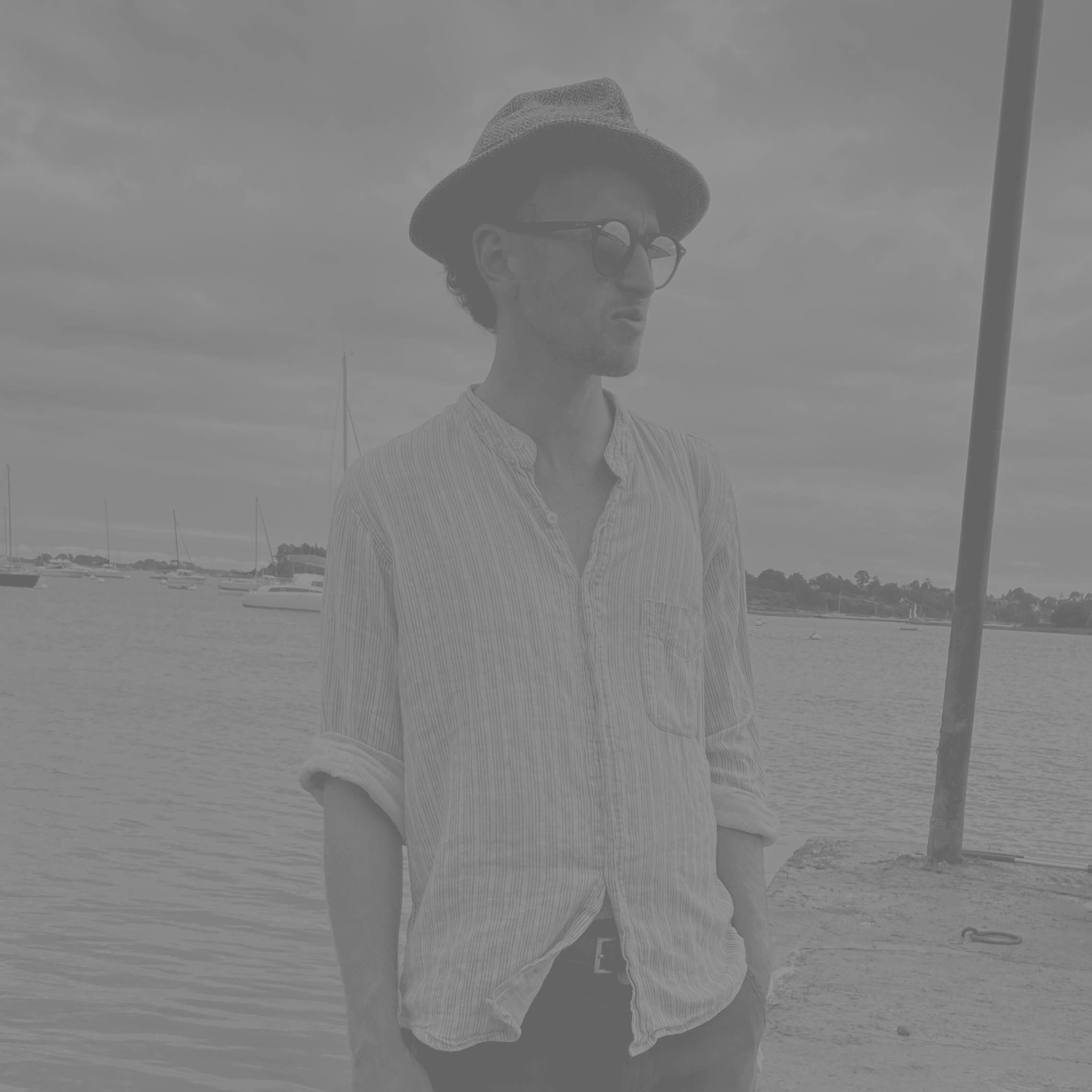
Páraic lives in Britanny, north-west France; he maintains professional and creative relations across La Manche and particularly in the Anglo-Norman Isle of Jersey. Anar Noonan has kindly provided a summary of Páraic’s professional, academic and creative activities below.
2022 – ongoing
Páraic began working independently under the trade name PARRIIC. Initially part-time as a publishing production manager, it developed into full-time work providing collections and records management consultancy and publishing services.
2020 – ongoing
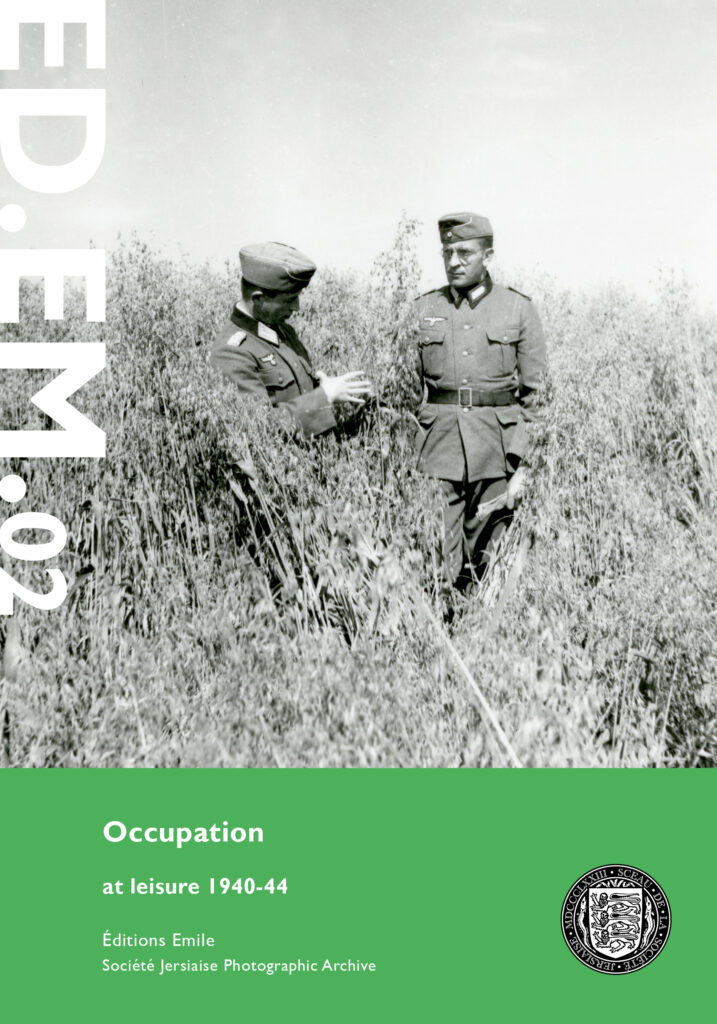
Páraic founded Éditions Emile with Martin Toft as an imprint of the Société Jersiaise Photographic Archive to develop contemporary photographic practice and engagement with archival collections. The editorial team has grown with Shan O’Donnell and Rochelle Merhet joining the team.
2019 – 2024
Páraic worked as an archivist and manager of the Société Jersiaise Photographic Archive. He oversaw the archive during a transitional period both for the department and the organisation, introducing new operational procedures and policies; the launch of a shared online catalogue with Jersey Heritage Trust, bringing the Island’s key archive, museum and research library collections together via a single online catalogue; and several innovative community engagement projects, such as a key stage two after school photography club and series of workshops aimed at empowering the community to document their own communities.
2020 – 2022
Páraic qualified as an archivist and records manager through the CAIS, University of Dundee. He used his optional modules to focus on audio-visual collections and preservation with a particular focus on caring for plastic film materials and developing policy documentation.
2019 – 2022
Páraic worked as Executive Editor of the Société Jersiaise. He was responsible for introducing set templates and series to provide a consistent house style and streamline production. He was responsible for delivering several books including The Decline of Francophone Methodism by Dr Rory Hill, Le Journal de Daniel Messevery translated by Valérie Nöel and the monumental Hamptonne: and vernacular architecture of Jersey by Prof. Warrwick Rodwell.
2012 – 2019
Páraic worked as freelancer in a variety of roles across art installation and creative performance event production. As an extension of his personal practice he delivered book production workshops to the public and through the University of South Wales, Documentary Photography course.
2011 – 2012
Páraic gained a Masters degree in Book Arts and Publishing at the University of Creative Arts, Farnham. His work was centered around British nationalism, specifically what was at the time its banal omnipresence. It is telling much has changed in the last 15 years, as the far right in the UK was then still very much a loud but minority outcast group football hooligans and racists.
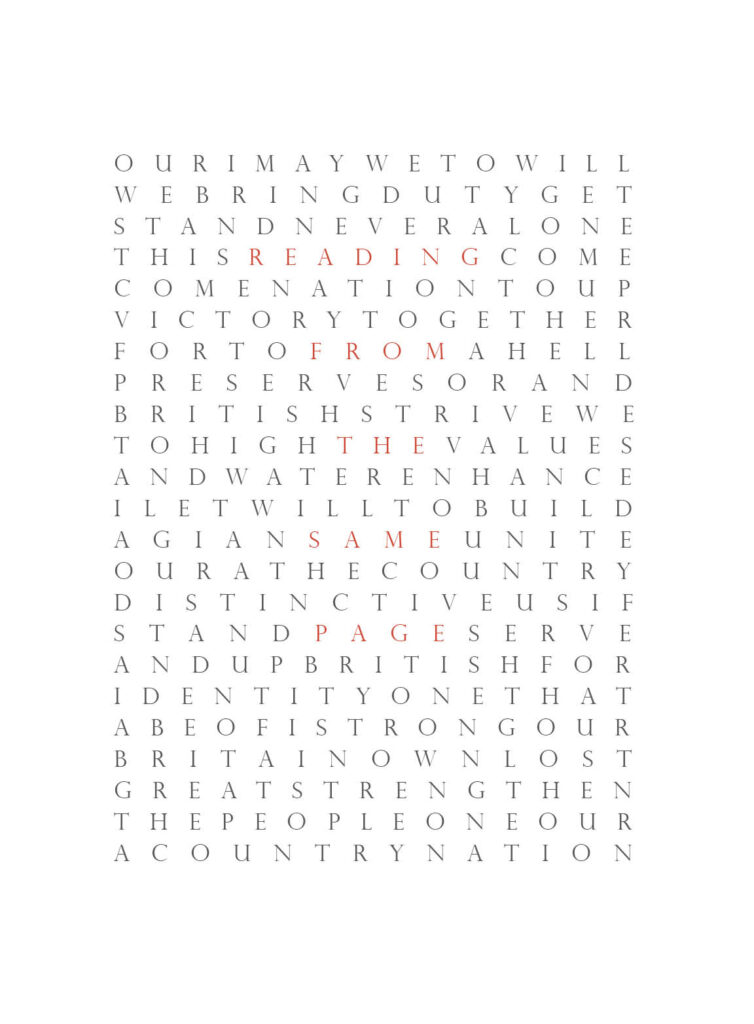
Páraic produced a set of artist books: Ar Kay Dee (2011), Prayers of a Nation (2012), Notes on British Nationalists (2012) and Reading from the Same Page (2012). As the course progressed the purpose of each book became the semiotic analysis nationalist language. Not in its overtly xenophobic form, rather the seemingly innocent mundane rhetoric of mainstream politicians between the end of the cold war and the financial crash of 2008. The fact that so much mainstream political rhetoric in 2025 is overtly xenophobic, demonstrates how nationalism in its banal form is merely a sleeping beast. The language conditions a significant proportion of the population, they are in effect primed to embrace its more exclusionary, violent form whenever the political moment demands.
2008 – 2011
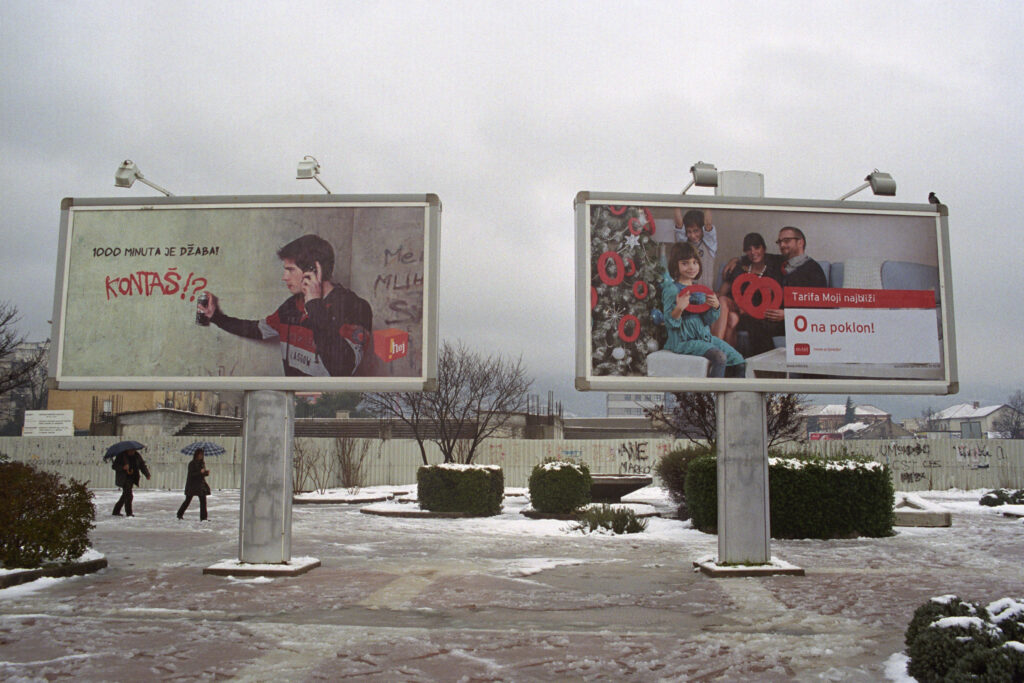
Páraic studied Documentary Photography at the University of Wales, Newport. His final assignment was a somewhat confused but nevertheless significant for him as it marked his first critical engagement with nationalism. He made four visits to Mostar, Bosnia-Herzegovinia, drawn there by the fact that the city had the highest rates of intermarriages between Muslims (largely Bosnian) and Catholics (largely Croatian) in Europe prior to the disintegration of the Republic of Yugoslavia.
Rather than engage directly with the painful story of the war and division, and the personal experiences still lived in the city (a perfectly valid and normal approach to take); he decided to try using it as a platform on which to visualise critical concepts of nationalism. The main theme he addressed with varying degrees of success was how in the name of protecting cultural traditions, the homogenising force of nationalism and the modernising drive to compete in capitalist markets in fact destroys the very values and way of life the nationalists claimed to protect. Leaving society valueless, a position from which individuals must by derive meaning from flag-waving and commercialism.
Visually, Páraic sought to address universal concepts of theory, the elephant that we never fully see is the very recent and bloody war that took place on those streets. He never quite managed to reconcile this struggle in the edit. Though Ken Grant said the above image was great.
Páraic’s dissertation, Photography & Aura – From Revolutionary to Bourgeoisie (2011) took a more conventional approach. He built it around a deconstruction of Walter Benjamin’s the Work of Art in the Age of Mechanical Reproduction. Rather than dwelling on the democratising power of photography, Páraic took each Benjamin’s arguments for how photography circumvents the aura of the art object and outlined how the art market has since driven photography into rejecting its revolutionary nature; embracing the original, the unique, the expensive, and the object. In order to be accepted as art.